





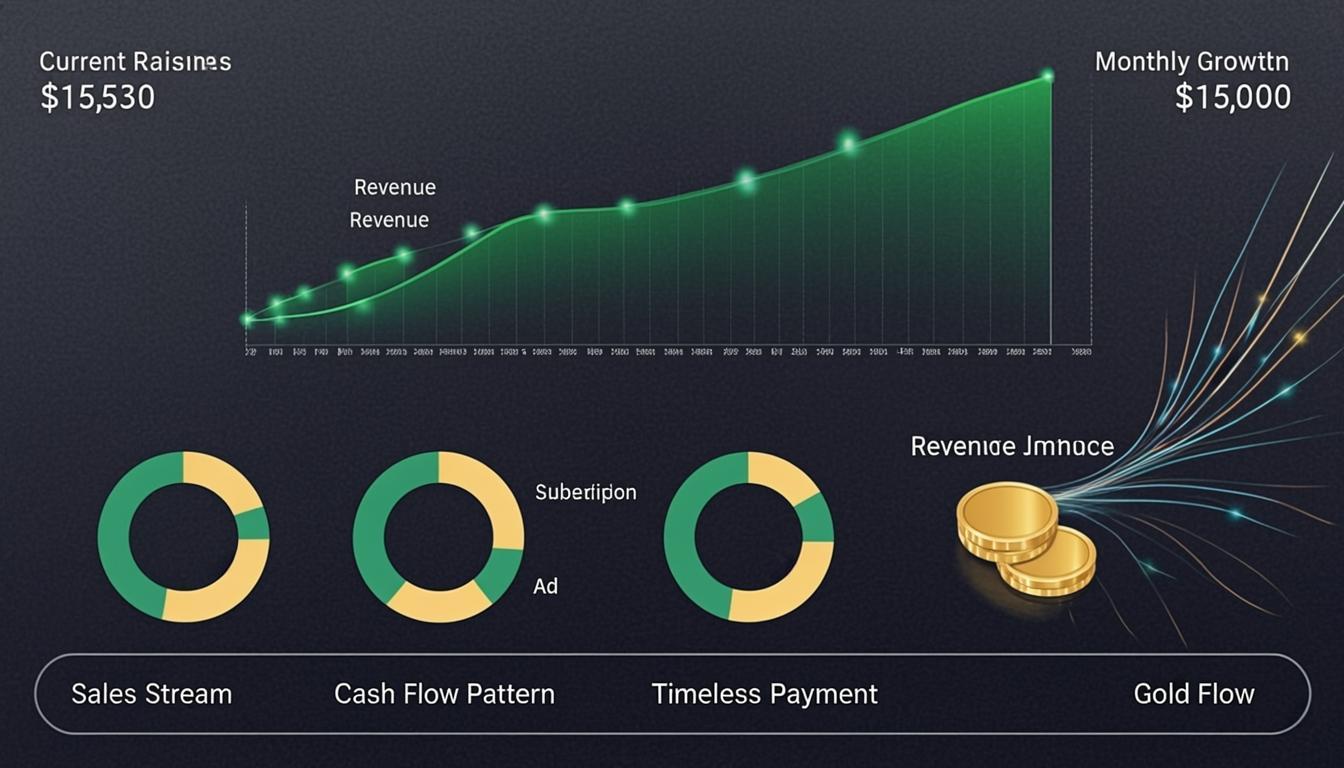
I have been monetizing websites for six years. In that time, I have tried every revenue model you can imagine, made every mistake you can make, and eventually settled on a framework that turns traffic into reliable, predictable income. The framework is not complicated. But it requires understanding which monetization methods work for your traffic level and which ones are a waste of time.
Here is the mistake most website owners make: they choose a monetization method based on what sounds good, not what matches their situation. A site with 5,000 monthly visitors cannot earn meaningful ad revenue. A site with 500,000 monthly visitors is leaving money on the table if they only run Adsense. The method must match the math.
I am going to walk you through nine monetization methods, ranked from highest to lowest earning potential. For each one, I will tell you the minimum traffic you need, the realistic monthly income you can expect, the exact tools to set it up, and the common mistakes that kill your earnings. By the end, you will know exactly which methods to pursue and which to skip based on where your site is right now.
Method 1: Premium Ad Networks — Up to $40 RPM ($500 to $10,000+/Month)
Premium ad networks like Mediavine and Raptive (formerly AdThrive) are the gold standard for display advertising. They negotiate directly with advertisers to secure RPMs (revenue per 1,000 sessions) of $15 to $40, compared to Google AdSense’s $2 to $5. The difference is not marginal. It is transformative.
How it works: You apply to the network, and if accepted, they serve ads on your site using their optimized ad placements and direct advertiser relationships. You do not choose the ads. They handle everything. You just collect significantly higher payments.
Minimum traffic required: Mediavine requires 50,000 sessions per month (measured by Google Analytics). Raptive requires 100,000 pageviews per month. These thresholds exist because premium advertisers want scale, and the networks need enough inventory to negotiate favorable rates.
Realistic income: At 50,000 monthly sessions with a $20 RPM, you earn $1,000/month. At 100,000 sessions with a $30 RPM, you earn $3,000/month. At 500,000 sessions with a $35 RPM, you earn $17,500/month. Finance and technology niches earn on the higher end. Food and lifestyle earn on the lower end.
How to apply:
For Mediavine, ensure your site has at least 50,000 GA sessions in the last 30 days. Your content should be original, high-quality, and comply with their content policies (no adult content, no illegal content, no low-quality AI spam). Apply through their website. Approval typically takes 1 to 2 weeks. Once approved, you install their header bidding script and they handle the rest.
For Raptive, the threshold is 100,000 pageviews. They also evaluate content quality, site design, and audience engagement. Raptive tends to work better for lifestyle, food, and parenting niches, while Mediavine is stronger for finance, tech, and business.
Common mistake: Applying too early. If your traffic is under the threshold, you will be rejected, and you cannot reapply for 60 days. Wait until you have consistently hit the threshold for two months before applying.
Method 2: Digital Products — $29 to $199 per sale ($200 to $8,000+/Month)
Selling digital products is the highest-margin monetization method available. You create the product once, and it can sell infinitely with zero marginal cost. Templates, guides, toolkits, courses, and software are all digital products that your audience will buy if they solve a specific problem.
How it works: You create a digital product that addresses a problem your audience has, set up a checkout page, and drive your existing traffic to the product page. Unlike ads, which pay fractions of a cent per visitor, a single digital product sale can be worth $29 to $199.
Minimum traffic required: Technically zero. I have seen sites with 2,000 monthly visitors earn $500+ per month from a single well-targeted template pack. But 10,000+ monthly visitors gives you enough volume to test and optimize.
The five most profitable digital product types in 2026:
1. Notion templates ($19 to $49 each): The market for Notion templates has exploded. Build a template that solves a specific workflow problem: project management, content calendar, client onboarding, habit tracking. Sell through Gumroad or your own site.
2. Spreadsheet tools ($29 to $79 each): Google Sheets and Excel templates that automate calculations, track metrics, or manage processes. Financial planners, budgeting tools, and business dashboards are consistently top sellers.
3. Email sequences ($39 to $99 each): Pre-written email sequences for specific industries: welcome sequences, nurture sequences, launch sequences, re-engagement sequences. Business owners hate writing emails and will pay for done-for-you sequences.
4. Comprehensive guides ($49 to $149 each): Deep-dive PDF or Notion guides that walk readers through solving a complex problem. “The Complete Guide to Launching a Faceless Website” is more valuable than a $4.99 ebook because it delivers a specific outcome.
5. Mini-courses ($79 to $199 each): Short, focused video courses (3 to 10 lessons) that teach one specific skill. Not a 40-hour masterclass. A 2-hour deep dive into one topic. Built with Teachable or Gumroad.
Tools to sell digital products:
Gumroad — Free to start, 10% fee on sales. Best for templates and guides. Fastest setup.
Teachable — From $39/month. Best for video courses. Handles hosting, payments, and student management.
Lemon Squeezy — From $0/month (5% fee). Best for software and SaaS products. Handles VAT and taxes globally.
Payhip — Free to start, 5% fee. Best for PDFs and ebooks. Simple and reliable.
Common mistake: Creating a product before validating demand. Pre-sell your product idea with a landing page and a “Buy Now” button. If nobody clicks, the product would not have sold either.
Method 3: Affiliate Marketing — $10 to $500+ per conversion ($100 to $5,000+/Month)
Affiliate marketing earns you a commission every time someone purchases a product through your referral link. The key to profitable affiliate marketing is not volume. It is relevance. Recommending the right product to the right person at the right moment.
How it works: You join affiliate programs for products your audience uses, create content that naturally references those products, and include your affiliate links. When a reader clicks and buys, you earn a commission.
The highest-paying affiliate programs by niche:
Finance: Credit card and banking affiliates pay $50 to $200 per approved application. Personal Capital pays $100 per lead. Bankrate and Credit Karma programs pay $50 to $150 per signup.
Software/SaaS: Most SaaS affiliate programs pay 20% to 30% recurring commission. Shopify pays $150 per referral. Semrush pays $200 per subscription. HubSpot pays up to $1,000 for enterprise referrals.
Web hosting: Hosting affiliates are among the most lucrative. WP Engine pays $200+ per referral. Cloudways pays $50 to $125 per sale. SiteGround pays $50 to $100 per sale.
Where to find affiliate programs:
ShareASale — 20,000+ merchant programs across all niches. Free to join.
CJ Affiliate — Premium brands and higher commissions. Requires approval for each program.
Impact — Technology and SaaS focused. Clean interface, reliable tracking.
Amazon Associates — 1% to 4% commission, but massive conversion rate due to brand trust. Good for product review sites.
Common mistake: Promoting products you have not used. Your audience can tell when a recommendation is genuine versus when you are pushing a product for the commission. Only promote products you have personally tested and would recommend to a friend.
Method 4: Sponsored Content — $200 to $5,000+ per post
Sponsored content is when brands pay you to write about their product or service on your site. This is different from affiliate marketing because you are paid a flat fee regardless of whether anyone buys the product.
How it works: Brands approach you (or you pitch them) about creating content that features their product. You write an honest review, tutorial, or comparison that includes their product. You disclose the sponsorship clearly. You get paid.
Minimum traffic required: 10,000 monthly pageviews for small sponsorships ($200 to $500). 50,000+ for mid-tier ($500 to $2,000). 100,000+ for premium ($2,000 to $5,000+).
How to attract sponsors:
Create a “Work With Us” or “Sponsor” page on your site that includes your traffic stats, audience demographics, content examples, and pricing. Make it easy for brands to say yes.
Join sponsorship marketplaces like AspireIQ, Cooperatize, or GetBlogger that connect publishers with brands.
Reach out directly to brands in your niche. Find companies that advertise on similar sites and pitch them with a personalized email that shows you understand their audience.
Common mistake: Accepting sponsored content that does not fit your audience. A single off-brand post will not kill your site, but a pattern of irrelevant sponsorships erodes trust. Only accept sponsorships that genuinely serve your readers.
Method 5: Email Newsletter Monetization — $20 to $100+ CPM
Your email list is an asset you own, unlike social media followers or search traffic that can disappear overnight. Monetizing your newsletter through sponsored placements, premium subscriptions, or affiliate links creates a reliable revenue stream that is immune to algorithm changes.
How it works: You build an email list by offering a valuable lead magnet on your website. Then you monetize that list through sponsored mentions in your newsletter, premium paid tiers, or affiliate recommendations.
Tools to build and monetize your list:
ConvertKit — Free for first 1,000 subscribers. Best for creators. Built-in landing pages and automation.
Beehiiv — Free for first 2,500 subscribers. Best for newsletter-first businesses. Built-in ad network.
MailerLite — Free for first 1,000 subscribers. Best for small businesses. Excellent automation builder.
Realistic income: A newsletter with 5,000 engaged subscribers can earn $500 to $2,000/month from sponsored placements. A premium newsletter at $10/month with 500 paying subscribers earns $5,000/month.
Common mistake: Not starting your list early enough. Every day you wait to start collecting emails is a day you are not building your most valuable monetization asset. Start today, even if you only have 100 visitors per month.
Method 6: Online Courses — $97 to $997 per sale
Online courses command premium prices because they deliver structured learning with a clear outcome. Unlike a blog post that informs, a course transforms. Students pay for the transformation, not the information.
How it works: You create a video-based or text-based course that teaches a specific skill, package it with supporting materials, and sell it through your site or a course platform.
Platforms ranked by cost (most to least expensive):
Kajabi — From $149/month. All-in-one platform with course hosting, email marketing, landing pages, and community features. Best if you want everything in one place.
Teachable — From $39/month. Course-focused platform with clean student experience and reliable payments. Best for video courses.
Thinkific — Free plan available. Similar to Teachful with more customization options. Best for creators who want control over branding.
Gumroad — Free to start, 10% fee. Simplest option for selling video files, PDFs, or any digital product. No course-specific features, but it works.
Common mistake: Creating a course before you have an audience that wants it. Pre-sell your course at a discount before recording a single lesson. If you get 10 pre-orders, you have validation. If you do not, you just saved yourself weeks of work.
Method 7: Consulting and Coaching — $100 to $500+/hour
If your website establishes you as an authority in your niche, consulting and coaching become natural monetization extensions. You are not selling your content. You are selling your expertise, personalized to each client’s situation.
How it works: Add a “Work With Me” or “Hire Me” page to your site. Offer 1-on-1 consulting calls, monthly coaching packages, or done-for-you services. Your website content serves as your portfolio and lead generator.
Tools to manage consulting:
Calendly — Free plan available. Handles scheduling and time zone management.
Stripe — Free to start, 2.9% + $0.30 per transaction. Handles payments and invoicing.
Clarity.fm — Pay-per-minute consulting platform. Handles scheduling, calls, and payments.
Realistic income: 5 clients per month at $300 each is $1,500/month. 10 clients at $500 each is $5,000/month. This is the fastest monetization method for sites with expertise-driven content.
Method 8: Membership Communities — $9 to $49/month per member
A membership community gives your most engaged readers a place to connect with you and each other, access exclusive content, and get personalized support. The recurring revenue model makes this one of the most predictable income streams.
How it works: You create a private community (typically on Discord, Circle, or a dedicated platform) with exclusive content, live Q&A sessions, and peer support. Members pay a monthly fee for access.
Platforms ranked by cost (most to least expensive):
Circle — From $49/month. Purpose-built community platform with courses, events, and discussions. Best premium option.
Skool — From $99/month. Community + courses in one platform. Simple, clean interface.
Patreon — Free to start, 5 to 12% fee. Largest creator community platform. Best for audiences that already follow you.
Discord — Free. Add paywall with Memberful at $25/month. Most flexible for tech-savvy creators.
Realistic income: 100 members at $19/month is $1,900/month. 500 members at $29/month is $14,500/month. The key is delivering enough value that members stay for months, not just one month.
Method 9: Google AdSense — $2 to $5 RPM ($20 to $200/Month)
I am listing AdSense last because it should be your last resort, not your first. AdSense is the easiest ad network to get into, but it pays the least. Use it as a stepping stone while you build traffic toward Mediavine or Raptive thresholds.
How it works: Apply to AdSense, add the code to your site, and Google serves ads. You earn money when visitors view or click the ads.
Minimum traffic required: There is no official minimum, but meaningful income starts at 10,000+ pageviews per month.
Realistic income: At 10,000 pageviews with a $3 RPM, you earn $30/month. At 50,000 pageviews with a $4 RPM, you earn $200/month. It is pocket change compared to premium networks, but it is better than nothing while you grow.
Common mistake: Placing too many ad units. More ads does not mean more revenue. It means worse user experience, lower engagement, and eventually lower traffic. Use 2 to 3 strategic ad placements, not 8.
The Monetization Framework: Match the Method to Your Traffic
Here is the simple framework I use to decide which monetization methods to activate at each traffic level.
0 to 5,000 monthly visitors: Focus on digital products, affiliate marketing, and consulting. These methods do not require high traffic. They require the right audience with the right problem. You can earn $200 to $1,000/month at this level.
5,000 to 50,000 monthly visitors: Add sponsored content and email newsletter monetization. Your growing audience makes you attractive to sponsors and gives your newsletter enough subscribers to monetize. Expect $500 to $3,000/month total.
50,000 to 100,000 monthly visitors: Apply to Mediavine for premium ads. Add membership community. Your traffic now supports premium ad rates, and your engaged audience can sustain a paid community. Expect $2,000 to $8,000/month total.
100,000+ monthly visitors: Layer on Raptive for even higher ad rates, launch an online course, and optimize your entire monetization stack. At this level, you should be earning $5,000 to $20,000+ per month across all methods.
The key insight: start with the methods that work at your current traffic level, not the ones that sound most exciting. A $49 template pack sold to your 2,000 monthly visitors today is worth more than a hypothetical $15 RPM ad network you cannot qualify for yet.
If you want my free monetization calculator spreadsheet that shows exactly what you can earn at your traffic level, email us at hello@kivora.pages.dev with the subject line “Monetization Calculator.”

Your traffic is an asset. Start treating it like one.