



In March 2024, Sarah Chen disappeared.
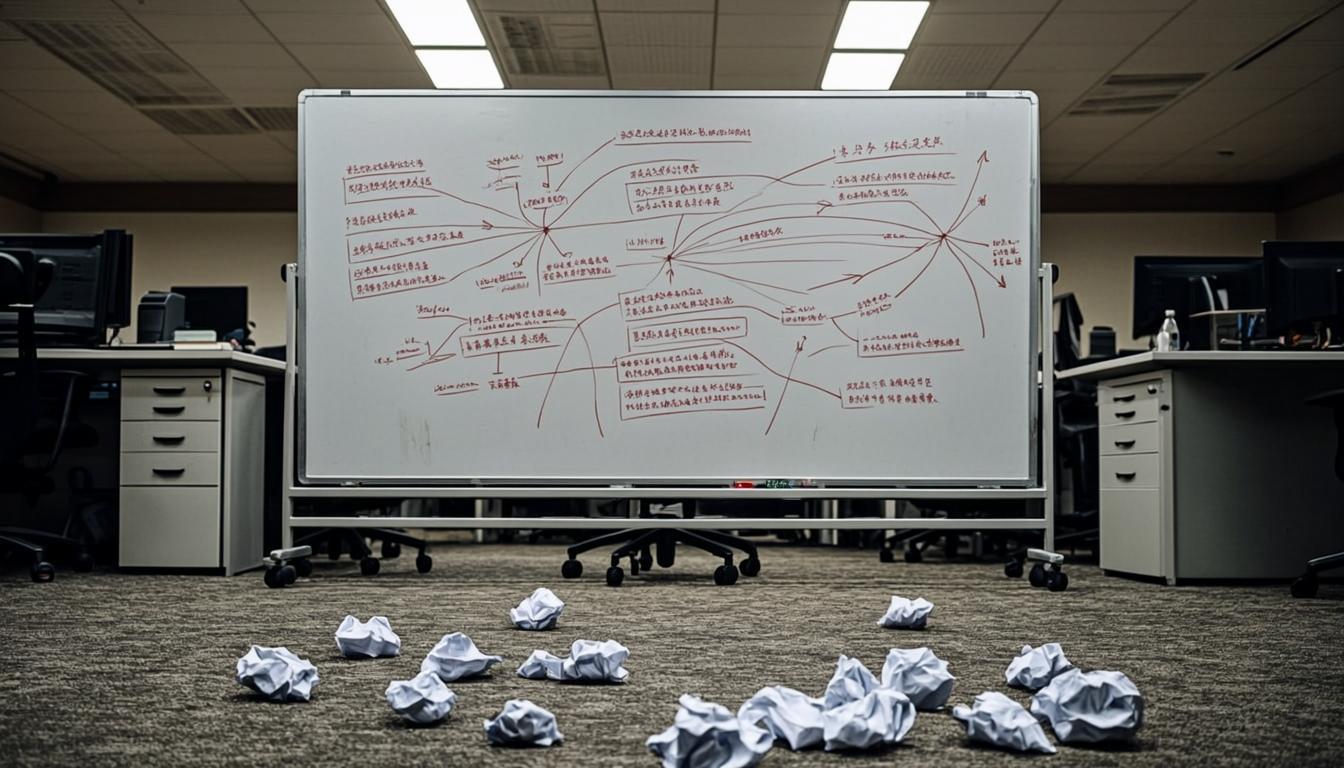
Not from social media—from her life. She stopped answering emails. Stopped showing up to her own company’s all-hands. Stopped eating regular meals. Her co-founder found her in her apartment after 5 days of silence, surrounded by delivery containers, laptop open to an unsent resignation letter.
Her company—Relay, an AI customer support platform—was technically successful. $2.3M ARR. 35 employees. Recent Series A. She was technically a “successful founder.”
She was also technically unable to function.
This is the story of founder burnout that doesn’t end with a dramatic exit or collapse—but with a slow, unglamorous recovery that most entrepreneurs never document.
The Invisible Accumulation
Chen’s burnout didn’t arrive suddenly. It accumulated through 1,000 small compromises over 3 years.
The specific timeline:
| Year | Revenue | Team | Chen’s Hours/Week | Sleep/Night | Key Compromise |
|---|---|---|---|---|---|
| 2021 | $0 | 2 | 80 | 5 hours | “Just until we raise” |
| 2022 | $400K | 8 | 75 | 5 hours | “Just until product-market fit” |
| 2023 | $1.2M | 22 | 70 | 4 hours | “Just until Series A” |
| 2024 | $2.3M | 35 | 65 | 3–4 hours | “Just until we’re stable” |
The “just until” never arrived. Each milestone created new pressure, not relief. The Series A brought board expectations. The team growth brought management complexity. The revenue growth brought customer concentration risk.
Chen’s specific coping mechanism: work more. She believed—truly believed—that if she just worked hard enough, the anxiety would resolve. The opposite happened. The harder she worked, the more anxious she became about the work she wasn’t doing.
The Collapse (March 2024)
The specific trigger was mundane. A customer escalation. A bug in production. A team member quitting. Any of these, individually, was survivable. Together, on a Tuesday, they broke something.
Chen sat down to write an email to her co-founder. “I need to step back.” She couldn’t send it. The shame was paralyzing. Founders don’t step back. Founders push through.
She pushed through for 5 days without leaving her apartment. Then she stopped pushing.
Her co-founder—who’d been covering for her increasingly frequent absences—finally came to check. The scene was shocking not because of drama, but because of absence. Chen was just… stopped. No energy for crisis. No energy for explanation.
The Medical Reality
Chen’s diagnosis, from a psychiatrist specializing in high-performers: severe burnout with secondary depression and anxiety.
The specific physiological markers:
- Cortisol levels indicating chronic stress (3x normal)
- Sleep architecture destroyed (no REM cycles detected)
- Cognitive testing showing 40% impairment in executive function
- Cardiac markers suggesting early strain
“You’re not weak,” the psychiatrist told her. “You’re injured. The question isn’t whether to stop. It’s whether you want to recover or collapse permanently.”
Chen took medical leave. Official, documented, board-approved. 6 months. No work contact. No “just checking in.” The company would survive or fail without her.

The Recovery (Months 1–6)
Month 1–2: Physical restoration
- Sleep medication to force 8 hours nightly
- Nutritionist-designed meal plans (she’d lost 15 pounds)
- Daily walks, no phone
- No work thoughts allowed (cognitive behavioral therapy techniques)
Month 3–4: Emotional processing
- Trauma therapy specifically for founder identity
- Processing the belief “I am only valuable through my company”
- Grieving the “successful founder” identity she’d constructed
- Reconnecting with non-founder friends (most had been abandoned)
Month 5–6: Gradual reintroduction
- 2 hours/week of “work-like” activity (reading industry news)
- 1 meeting with co-founder, structured, time-limited
- Writing (not publishing) about the experience
- Decision point: return to Relay or not?
The Decision to Return (Month 7)
Chen chose return, but with non-negotiable conditions:
| Previous Structure | New Structure |
|---|---|
| CEO, all functions | CEO, strategy + culture only |
| 65 hours/week | 35 hours/week, enforced |
| Daily standups | Weekly written updates |
| Real-time Slack | Async communication only |
| “Always available” | Phone off 6 PM–9 AM |
| No vacation | Mandatory 2 weeks quarterly |
The board accepted. The alternative was losing her permanently. The co-founder—who’d covered during her leave—preferred reduced-scope Chen to no Chen.
The Rebuilding (Months 7–18)
The return was harder than the leave. Chen had to learn to work differently while surrounded by evidence of her previous patterns.
Specific techniques that worked:
Time-boxing with external enforcement
- Assistant scheduled all meetings
- Hard stops enforced (literally, assistant would enter and end meetings)
- Phone locked in drawer during deep work blocks
Decision delegation
- Any decision requiring <10 minutes of her time: delegate
- Any decision reversible: delegate
- Only strategic, irreversible decisions reached her
Energy management over time management
- Morning hours for creative work (when cognition was best)
- Afternoons for meetings (when social energy was available)
- Evenings for restoration (non-negotiable)
The “burnout check” protocol
- Weekly therapist session
- Monthly psychiatric evaluation
- Quarterly “life audit” with coach
- Permission to take additional leave if metrics degraded
The Current Reality (April 2026)
Relay has $4.1M ARR. 52 employees. Chen works 32 hours/week, mostly mornings. She’s a different CEO—more deliberate, less reactive, more present.
She’s also public about her experience. The “unsent resignation letter” became a published essay. The medical leave became a template other founders used. The recovery protocol is shared in founder support groups.
The specific insight she shares:
“Burnout isn’t a failure of resilience. It’s a failure of boundaries. I was ‘resilient’ for 3 years—until my body broke. Real resilience is saying no before the breaking point.”
She no longer believes in “pushing through.” She believes in sustainable pace. The company is growing slower than it could. She’s growing as a human faster than she ever has.

Kivora documents founder mental health and the recoveries that don’t make headlines. Join the newsletter — Subscribe here.