
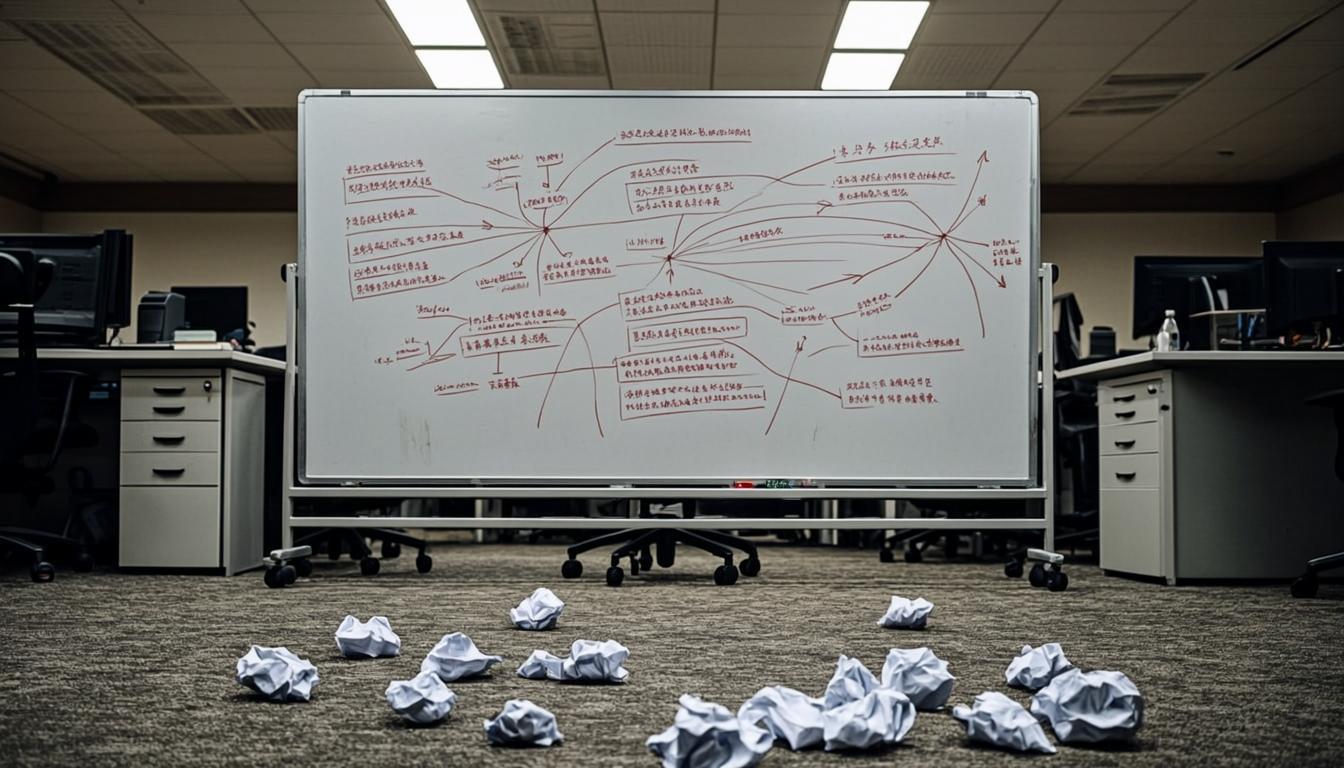





In 2023, Jason Park was among the highest-paid prompt engineers in the market. $350/hour consulting for Fortune 500s. $50,000 training contracts. A Substack with 40,000 subscribers called “The Art of the Prompt.”
By late 2024, he was unemployed. Not because prompt engineering disappeared—because it became too easy.
This is the story of building expertise in a skill that the market decided wasn’t a skill anymore.
The Golden Window
Park’s rise coincided with a specific moment: post-ChatGPT launch, pre-GPT-4 Turbo. Companies were terrified of AI but didn’t understand it. They needed translators.
The 2023 prompt engineering market:
| Service | Price | Deliverable |
|---|---|---|
| Executive workshop | $15,000 | 4-hour session, “AI strategy” |
| Prompt library | $25,000 | 50 custom prompts for specific use case |
| Retainer consulting | $350/hour | Unlimited prompt optimization |
| Team training | $50,000 | 2-day intensive, 20 employees |
Park’s secret wasn’t technical depth. It was translation. He could talk to engineers about chain-of-thought reasoning, then turn around and tell a CMO why that mattered for brand voice consistency.
His Substack posts were case studies: “How I reduced a legal team’s contract review time by 70% with 3 prompt tweaks.” The tweaks were real. The results were verified. The demand was insatiable.
The Commoditization Event
GPT-4 Turbo launched in November 2023. Then Claude 3. Then Gemini Pro. The pattern was consistent: each new model required less prompt engineering to get good results.
The specific shifts that killed the market:
| Era | Skill Required | Park’s Value |
|---|---|---|
| GPT-3.5 (2023) | Detailed prompt engineering, few-shot examples | High: needed expertise to get quality |
| GPT-4 (early 2024) | Basic prompting, some structure | Medium: helped optimize but less critical |
| GPT-4 Turbo / Claude 3 (mid-2024) | Natural language, minimal prompting | Low: models understood intent directly |
| GPT-4o / Claude 3.5 (late 2024) | Conversation, no “engineering” needed | None: expertise indistinguishable from general literacy |
Park’s first warning was a canceled contract. A legal tech company that had paid $25,000 for a prompt library in March emailed in June: “We’re not renewing. The new models don’t seem to need the special prompts anymore.”
He dismissed it as one client. Then another canceled. Then a workshop attendee asked, “Can’t we just ask the AI naturally now? Why do we need special techniques?”
By August, his $350/hour rate had dropped to $150, then $75, then “whatever you can afford.” The market had decided his skill was a feature, not a profession.
The Identity Crisis
Park’s entire identity was “prompt engineer.” His Twitter bio. His LinkedIn headline. The title on his business cards, which he’d been proud enough to print.
The collapse wasn’t just financial. It was ontological. If prompting wasn’t a skill, what was he?
The stages of his grief:
- Denial: “The models are just memorizing my techniques. Real prompting still matters.”
- Anger: “OpenAI is killing the profession they created. They owe us something.”
- Bargaining: “Maybe I can pivot to ‘AI workflow architect’ or ‘automation strategist’?”
- Depression: 6 weeks of no client work, no content creation, no clear future
- Acceptance: Not yet complete as of our February 2026 conversation
The depression stage was particularly dark. Park had defined himself through a specific expertise that was now, objectively, less valuable than basic computer literacy. He’d spent 2 years becoming world-class at something the world no longer needed world-class practitioners for.

The Failed Pivots
Park tried three repositionings in late 2024:
Pivot 1: “AI Strategy Consultant”
Same clients, broader scope. Failed because he had no operational experience implementing strategy. He could design prompts, not transformation roadmaps.
Pivot 2: “AI Educator for Non-Technical Professionals”
Online courses, lower price point. Failed because his audience—people who’d paid premium rates for expertise—now saw him as overpriced for commoditized content.
Pivot 3: “Automation Engineer”
Technical implementation using Make.com, n8n. Partially succeeded but required learning skills he’d previously hired others for. The income was 20% of his peak.
The Honest Assessment
Park was remarkably clear-eyed about what happened. “I wasn’t a fool. I was a specialist in a market that rewarded specialization, until it didn’t. The error was building identity around a tool rather than an outcome.”
He’d trained 40,000 people to prompt better. Many of them were now doing exactly what he’d taught them, without needing him. The education had destroyed the profession.
The specific lesson he shares now:
“If your expertise is ‘how to use Tool X,’ you’re building on sand. If your expertise is ‘how to solve Problem Y,’ you can survive tool changes. I taught the tool. I should have taught the problem.”
The Current Reality
As of early 2026, Park works as a “workflow consultant”—essentially a Make.com implementer with some AI integration. He earns $8,000–$12,000/month, a 70% pay cut from his peak.
He still writes his Substack, but the tone changed. Fewer “how to prompt” posts. More “how I survived professional extinction” reflections. The subscriber count dropped to 12,000, but open rates increased. The remaining readers want his perspective, not his prompts.
He’s considering a book: The Last Prompt Engineer: Surviving AI’s First Profession. The irony isn’t lost on him.
The Broader Pattern
Park’s story is a specific case of a general rule: expertise in interface skills has shorter half-lives than expertise in outcome skills.
| Interface Skill | Outcome Skill | Durability |
|---|---|---|
| Prompt engineering | Problem analysis | Interface dies, outcome persists |
| Excel formulas | Financial modeling | Interface changes, outcome valuable |
| Specific CRM admin | Customer retention strategy | Interface updates, outcome stable |
| No-code tool mastery | Process automation thinking | Tools change, logic persists |
The founders who survive technological shifts are those who solve problems that persist across tool generations. The ones who don’t, don’t.

Kivora documents professional extinction events and the people navigating them. Join the newsletter — Subscribe here.